


News
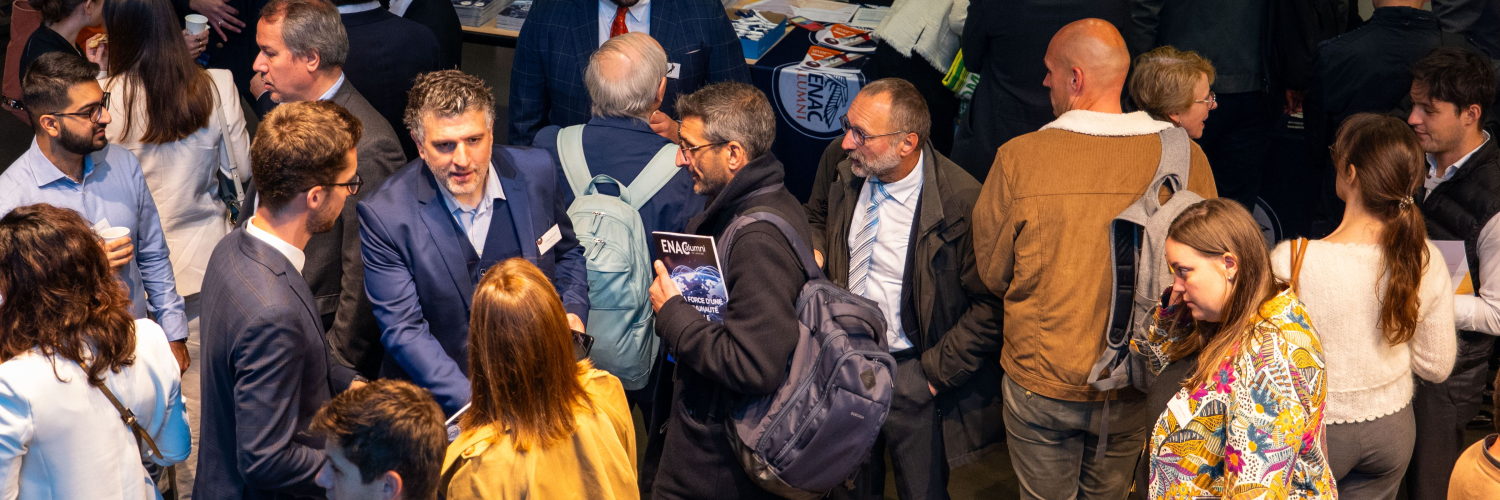
ETATS DE L'AIR 2025: a successful 6th edition!
On October 22, 2025, the 6th edition of the États de l'Air, organized by ENAC Alumni, highlighted major themes around the role of aviation in today's society and its challenges in the face of contemporary transformations. The debates brought together aviation industry experts at four separate round tables. The main aim of these discussions was to provide a clear vision of the issues surrounding territorial development, new traveler behaviors, cybersecurity and the growing use of artificial intelligence in aviation and aeronautical applications.
Photos album : Association ENAC Alumni - Photos
First round table : The importance of aviation in regional development, with participants Justine COUTARD (Managing Director, ADP Group), Chems CHKIOUA (General Manager, DGAC), Pascal de IZAGUIRRE (CEO, Corsair)e Groupe ADP), Chems CHKIOUA (General Manager DGAC), Pascal de IZAGUIRRE (CEO Corsair), Olivier JACOB (General Manager Outre-mer), moderated by Fabrice LUNDY.
Territorial aviation contributions
The speakers unanimously stressed the crucial role of the air transport sector in economic, social and territorial development. They reiterated the importance of connecting territories, as a lever for the local economy and social cohesion, particularly in rural areas and overseas territories that would be landlocked without aviation.
Pascal de Izaguirre highlighted the usefulness of small airports in France, even those considered unprofitable, underlining their impact on job creation and the development of the local fabric. Olivier Jacob stressed the importance of air links for remote regions, particularly overseas territories, where aviation remains essential to prevent a territorial divide.
An ecological transition in progress
Participants discussed the environmental challenges facing air transport. Justine Coutard presented the ADP Group's efforts to reduce airports' carbon footprints through low-carbon initiatives. Pascal de Izaguirre also detailed the choices made by Corsair, which has invested in more fuel-efficient aircraft such as the A330neo, and Chems Chkioua stressed the need to maintain territorial continuity while making the transition to more sustainable aviation.
Intermodality and cooperation
The development of intermodality, notably through smoother connections between train and plane, was also highlighted as a lever for attractiveness and sustainability. The specific example mentioned by Justine Coutard was Paris CDG airport, where rail traffic will account for a significant share of the total by 2050, with 45 million passengers expected. She also spoke of the key role played by Paris airports in regional cooperation on energy, training, employment and transport.
The participants concluded that aviation, although at the heart of many criticisms, remains essential to the economic and social dynamism of territories. However, its role will evolve to better meet the challenges of sustainability and intermodality.
To watch the replay of this conference: https://www.youtube.com/live/FVaXpip2tKA?si=8BRYELYIAF1SyrHM
Second round table: New traveler behaviors, with participants Mathieu BLONDEL (Partner ARTHUR D.LITTLE), Rafael SCHVARTZMAN (Regional Vice President IATA), Stéphanie CHARLAIX MEYER (SVP Customer Service AIR FRANCE/KLM), Mathieu DAUBERT (Executive Vice President Groupe ADP), moderated by Philippe FONTA.
Emerging trends
The round table identified a number of important changes in passenger behavior. Mathieu Blondel emphasized the democratization of air travel, with a more balanced distribution of socio-professional categories. The middle classes now have increasing access to air travel, which marks an evolution compared to the days when the upper professional social categories predominated.
Leisure travel and family visits were identified as the sector's main driver. Participants observed that travelers are tending to reduce the number of their trips, favoring longer stays. Stéphanie Charlaix-Meyer spoke of the rise of "bleisure" (a mix of business and leisure travel) and the growing importance of comfort and WiThe growing importance of on-board comfort and Wi-Fi, with a preference for Premium Eco class over classic Eco class.
Younger generations, spearheading change
Rafael Schvartzman emphasized the spectacular growth in travel among the younger generation. The latter are more inclined to prioritize their travel expenses, although their environmental sensitivity appears paradoxical: they prefer the train for domestic journeys in France, but continue to rely heavily on air travel for international journeys.
Transforming service expectations
Mathieu Daubert highlighted changes in passenger expectations, in particular the preference for complete digitization of processes: online tickets, smartphone check-in, rapid boarding, and so on. Travelers are also tending to avoid checking baggage into the hold, which in turn enables airlines to better manage logistics to limit delays.
In short, air transport must meet new expectations in terms of digitalization, comfort and environmental awareness. It is now adapting to more complex behaviors, particularly with a view to attracting the younger generation, while remaining competitive with other modes of transport such as rail.
To replay this conference: https://www.youtube.com/live/xx2hl6yaxzU?si=oB8Y4gk1n9P-CSu3
Third round table: Cybersecurity and aviation, with participants Yannick ASSOUAD (Executive Vice-President, Avionics THALES), Anne TRICAUD (Head of Corporate Security Office AIRBUS), Stéphane DEHARVENGT (Head of the ANSSI Sector Coordination Division), Fabien LECOQ (CEO Cybersecurity Business Line Group SOPRA STERIA), Marc LEYMONERIE (VP Group CISO / Air France KLM Group, President CERT Aviation France), Thibaut LIBLIN (President OSAC), moderated by Fabrice LUNDY.
A very real threat leading to digital challenges in the airline industry
Speakers stressed that aviation is a prime target for cyber attacks, due to the multitude of connected systems (air traffic control, intelligent aircraft, ground infrastructures, etc.). Stephane Deharvengt revealed that the number of attempted digital intrusions is constantly on the rise, requiring heightened vigilance and real-time defense systems.
Thibaut Liblin warned of the risks that go beyond technology, with possible impacts on the physical safety of passengers, such as counterfeit parts or supply chain disruptions. Yannick Assouad added that every component in the aeronautical chain - from the aircraft themselves to the subsystems on the ground - is susceptible to exploitation by hackers.
Innovation and adoption of a cybersecurity culture
In the face of these threats, the experts stressed the importance of thinking about cybersecurity right from the design stage. Anne Tricaud explained how modern on-board systems are designed to integrate security solutions, protecting passengers and sensitive data.
Fabien Lecoq stressed the need to develop a "collective cybersecurity reflex" at all levels, from large companies to SMEs, which can often represent vulnerable points of entry.
Worldwide cooperation
The speakers also emphasized the need for strong collaboration between all players in the sector: government agencies, aerospace companies and competitors. Marc Leymonerie illustrated this cooperation with the example of daily coordination meetings within CERT Aviation France to exchange information on risks and detected interference. Anne Tricaud mentioned that even rivals like Airbus and Boeing are collaborating on projects to strengthen global security.
Cybersecurity is now regarded as a strategic priority on a par with physical flight safety. Technological innovation and cooperation between the various stakeholders are essential to guarantee system protection and maintain confidence in air transport.
To replay this conference: https://www.youtube.com/live/pwNaVGRmmRo?si=Dcv78Mw3GTSgj-yI
Fourth round table: AI and aviation : prospects and applications for a connected sky, with participants Benoit FOREST (Director of Operations VINCI AIRPORTS), Claire PAGETTI (Research Director ONERA), Erwan PRUD'HOMME (CEO SixFoisSept), Pascal RAVEL (CEO Time to Fly), moderated by Hervé MIGNOT.
Artificial intelligence (AI) is transforming many sectors, and aviation is no exception. By combining the advanced computing capabilities of AI with the complex and rigorous needs of aviation, this field is making great strides towards a safer, more efficient and more innovative future. As such, artificial intelligence is becoming a keystone for the future of aviation, enabling advances in efficiency, safety, autonomy and user experience.
Embedded systems
Although pilots are still essential for flying aircraft today, AI is paving the way for increasingly autonomous aircraft. A number of research projects are being carried out in this field, notably by ONERA. In this field, which requires certification, Claire Pagetti emphasized the importance of making algorithms explicable, and of managing the risk of hallucination in generative AI.
Optimized flight operations combined with an enhanced passenger experience
AI is not limited to the technical aspects of aviation. In the airport sector, it can optimize operations through predictive analysis, enabling the anticipation of events likely to disrupt schedules.At the same time, it is a vector for improving passenger comfort and experience. Benoit Forest attests to the reality of the use of AI in many cases in the airport sector, particularly in the management of unforeseen events. He also stresses the importance of high-quality data.
Improving air safety
Safety is a key issue in aviation, and AI can push the boundaries even further. The integration of machine learning models into monitoring systems enables the detection of anomalies that might otherwise escape the human eye. In the field of predictive maintenance, AI can identify early warning signs of breakdowns, enabling parts or systems to be repaired before they become critical. Erwan Prudhomme adds that, beyond embedded systems, explicability is necessary, but is highly dependent on usage. He also points out that when safety is at stake, explicability must be total.
Similarly, AI is being deployed in the fields of security, regulatory compliance and document analysis. The contribution of AI in the field of compliance audits in particular represents a "game changer" both for the transformation of professions and for the necessary adaptation of professional training. In this field, the balance between innovation, acceptability, risk control and adaptation of professional practices is at the heart of the debate. Pascal Ravel points out that his teams are in the process of developing the tools for a major transformation of their profession, and raises the question of how to train future experts.
Although technological, economic and ethical challenges remain, it is certain that the relationship between AI and aviation will be at the heart of developments for decades to come in onboard systems, airport management, maintenance, audits and generally improved safety. in on-board systems, airport management, maintenance, audits and safety improvement in general.
To watch the replay of this conference: https://www.youtube.com/live/hy9MNdrZSkY?si=Q98xdXoVKz9kx4jY
Throughout the day, the four round tables highlighted future strategic challenges for aviation: adapting aviation to the ecological transition and territorial dynamism, understanding the new dynamics of travelers to foster growth, arming against cyber-attacks to preWe must also prepare for the growing emergence of Artificial Intelligence in aviation and aeronautical applications. It is clear that the ability to innovate, resilience through cooperation and the will to transform will thus be at the heart of the future of the aviation sector.
The sixth edition of État de l'Air was also marked by enriching discussions and workshops on innovations and regulations in the aviation sector. The event brought together experts, players from the public and private sectors, and stakeholders to reflect on the evolutions and challenges facing airport and aviation activities. Workshops focused on the following themes the new EASA regulations for ground handling, the new entry/exit system (EES), the challenges and prospects for general aviation, and finally the CDG & Vous public consultation on the future of Paris-Charles de Gaulle airport.
Workshop 1: New EASA ground handling regulations
This workshop focused on EASA (European Union Aviation Safety Agency) regulation 2025/20, as well as collateral amendments to several existing regulations(2014/139 on aerodromes, 2025/22 on IT systems management, 2025/23 on authorities' responsibilities, and 965/2012 on flight operations).
These regulations aim to improve safety in ground handling services, by introducing safety management systems (SMS), reporting mechanisms for events affecting safety, and instituting a "declaration of compliance" process by airport service providers.canisms for reporting events affecting safety, and instituting a "declaration of conformity" process by airport service providers.
Unlike certification by the competent authority, the declarative system allows airport assistants to start operations as soon as they declare their compliance with the regulations. Standards will be monitored through audits, although concerns have been expressed about the complexity of an increasing number of audits already carried out by bodies such as IATA (ISAGO) or airlines.
Nevertheless, EASA considers that the risk of an unjustified multiplication of audits is under control, and that the regulatory transition will be facilitated by pre-existing management systems, particularly in France, where ground handling companies are relatively well prepared.
The new standards, which will come into full effect in March 2028, are designed to enhance safety while simplifying administrative processes and bringing all airport service activities into line with European standards.
To watch the replay of this workshop: https://www.youtube.com/live/pOVnkoiQl-s?si=5OhB-_kCL3JJuuCy
Workshop 2: The new entry/exit system (EES)
This second workshop was dedicated to the new European Entry/Exit System (EES), operational since October 12, 2025 as part of border management. Designed to modernize the monitoring of third-country nationals' passage through the European Union, the EES records biometric data (fingerprints and passport photographs) for each entry and exit.trique data (fingerprints and passport photographs) for travelers holding short-stay visas or exempt from visas for stays of less than 90 days per 180-day period.
The EES has several objectives: to optimize border controls, improve national security and the fight against terrorism, modernize the management of passenger flows and prevent identity theft. The system incorporates interactive kiosks for collecting biometric data at border crossing points. Full implementation is scheduled for April 10, 2026.
In France, where deployment is well advanced thanks to substantial investment, initial results are promising. However, the major challenge remains the fluidity of passenger flows, particularly in the face of space constraints in airport terminals.
It is likely that passenger communication and technological efforts will need to be stepped up to minimize false alarms and optimize screening efficiency. Better knowledge of passenger flows and the creation of a mobile application have been suggested as solutions for improvement. Performance indicators (notably processing time per passenger) remain central to assessing the system's success.
To replay this workshop: https://www.youtube.com/live/8BLAhW80x5w?si=7DkWdTOJhIWM_LYW
Workshop 3: General aviation - Perspectives and innovations
General aviation covers all aviation activities outside commercial public transport. The workshop, presented in English, explored a number of development avenues, including EASA's "Flight Plan 2030" roadmap, focusing on four themes: flight safety, sustainability, digitalization and inclusion.
Sustainability and innovative technologies: New propulsion modes were at the heart of the debates, highlighting advances in electric, hydrogen and hybrid-electric propulsion. These technologies aim to reduce the carbon footprint of general aviation, notably through the use of sustainable alternative fuels (SAF). Similarly, the implementation of the Pipistrel Velis Electro electric aircraft was hailed as an important precedent, albeit one requiring regulatory adaptation over a 10-year period.
Standardization and social roles : General aviation is presented as a catalyst for innovation, not least thanks to its ability to experiment with new technologies at lower cost and risk. Wider issues were raised, such as relations with local communities and potential opponents, with examples of successful cooperation in other countries, notably the USA. The importance of general aviation for future aviation careers was also highlighted.
In conclusion, because in aviation everything starts with general aviation, this workshop showed how general aviation embodies a mission of technological innovation, environmental responsibility, and preparation for changes in the aeronautical world up to 2030.
To replay this workshop: https://www.youtube.com/live/pz0d9NU3Op0?si=Ki2KARx29zTTvfnA
Workshop 4: CDG & You - The future of Paris-Charles de Gaulle airport
The aim of the "CDG & Vous" workshop, organized by ADP Group, was to share the results of a public consultation on the future of Paris-Charles de Gaulle airport between 2035 and 2050. Organized between April and July 2025, this consultation involved over 6,000 contributions from residents, elected representatives, associations and economic players, with the aim of developing a common vision reconciling ecological transition, quality of life, innovation and economic challenges.
The project has five main focuses:
1. A multimodal station to strengthen transport connections,
2. Flexible infrastructure development,
3. Air freight growth,
4. Sustainable real estate,
5. And a low-carbon energy hub.
Commitments were made on key aspects such as noise reduction, safety, employability and ongoing dialogue with local communities. Among the major concerns expressed during the consultations, the multimodal station was identified as a strategic priority, while the ecological impact and changing travel habits were also the subject of enriched discussions.
The workshop highlights the ongoing transformation of air transport, which requires new infrastructural visions adapted to climate challenges and societal expectations.
To replay this workshop: https://www.youtube.com/live/OGmgqWXX4VM?si=t7yyalHXhkcsOKRX
The four workshops of the sixth edition of the États de l'Air illustrated a broad and diversified vision of the current and future challenges facing the aeronautical sector. From ground handling regulation (EASA) to biometric border management (EES), from technological innovation in general aviation to the development of Charles de Gaulle airport, the discussions showed an alignment on common values: sustainability, efficiency and inclusion.
The ecological and technological transition is at the heart of all these transformations, but it cannot be achieved without close cooperation between experts, competent authorities and local stakeholders. In conclusion, this edition invites us to pursue the efforts already underway, and to make aviation innovations strategic levers for industrial and social progress in 2030 and beyond.







Discover the Mobile App

No comment
Log in to post comment. Log in.